

Debottlenecking & Revamp
Identifying and removing process constraints to increase plant capacity, and defining the process scope for revamps.
Overview
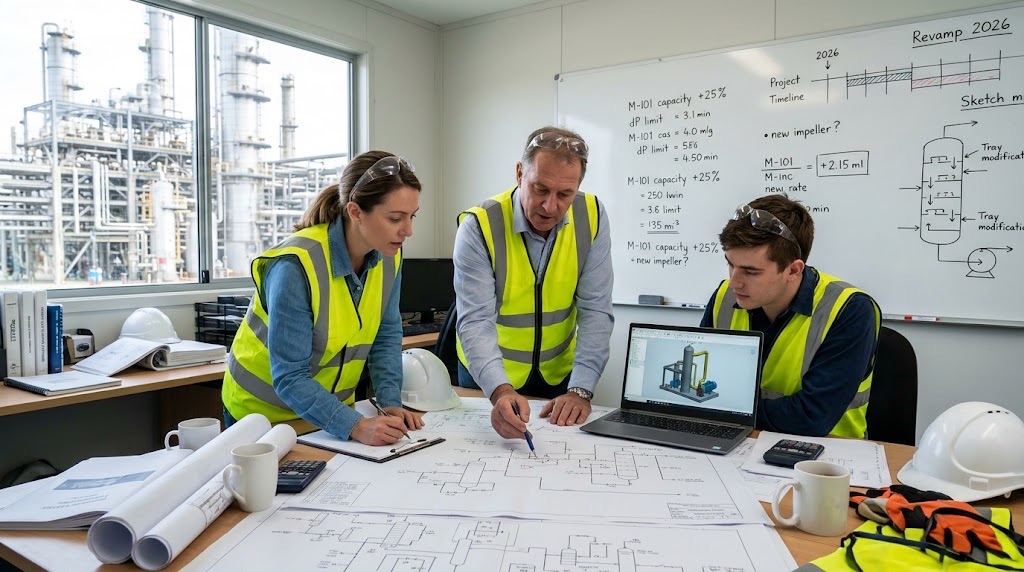
Debottlenecking and Revamp in chemical engineering is the systematic process of identifying, analysing, and modifying existing plant equipment and processes to increase production capacity, improve efficiency, and extend the facility's lifespan without the immense cost of building a new plant from scratch. Over time, changing market demands or operational wearing can cause a chemical plant's capacity to be limited by specific "bottlenecks"—such as an undersized distillation column, a restricted heat exchanger, or an inadequate pump. Chemical engineers tackle this by analysing real-world plant data, performing computer-aided process simulations, and conducting physical inspections to identify these limiting components. Once pinpointed, engineers design "revamps" (targeted retrofits), which can range from replacing column internals with high-efficiency trays to upgrading impellers, installing bypass piping, or integrating advanced control systems. This highly collaborative, multi-disciplinary effort requires careful planning to minimise downtime during installation, ultimately delivering a safer, higher-performing, and more cost-effective operation.
What this covers
- Capacity assessment and constraint identification: the governing constraint, not just the visible one
- Establishing the hydraulic and thermal capacity of each major item and comparing it against actual operating data
- Debottlenecking and revamp options, and their effect on the next constraint
- Process scope definition for revamps, ready for detailed engineering and vendor engagement
Discuss Your Process Challenge
To discuss a plant problem, scope an optimisation or safety study, review technical documentation, or engage for technical advisory services, contact us directly via email or book an initial consultation.