

Plant Troubleshooting & Root-Cause Analysis
Structured investigation of operating problems on live plant, from first symptoms to a verified root cause and recommended corrective action.
Overview
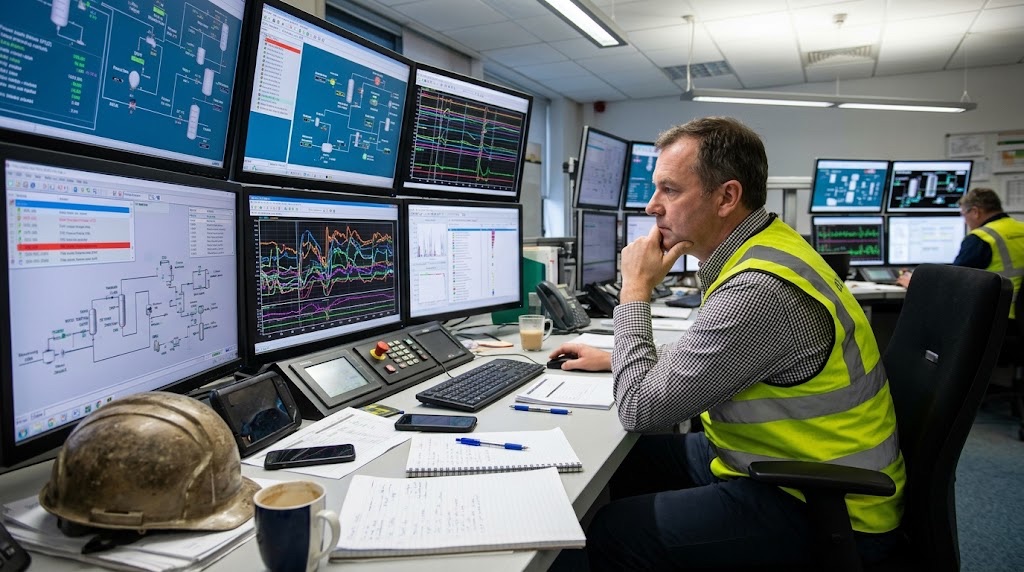
Plant Troubleshooting & Root-Cause Analysis (RCA) in chemical engineering is a systematic approach to identifying, diagnosing, and resolving unexpected operational deviations, process bottlenecks, and equipment failures. Rather than relying on trial-and-error adjustments—which can exacerbate process instability or compromise safety—chemical engineers employ structured frameworks such as the 5 Whys, Fishbone (Ishikawa) diagrams, and Hazard and Operability (HAZOP) studies. By integrating real-time distributed control system (DCS) data, historical process trends, heat and material balances, and physical fluid dynamics, engineers trace surface symptoms (such as sudden pressure drops, catalyst deactivation, or off-spec product streams) back to their physical, chemical, or mechanical root causes. Effective RCA not only restores stable operation but also drives long-term reliability through permanent corrective actions, safety instrumented system updates, and revised operating procedures.
What this covers
- Operating data and process model analysis
- Reconstructing the event timeline from DCS trends, operating logs and shift reports
- Testing competing hypotheses against heat and material balances
- Root-cause identification: the physical mechanism, not just the surface symptom
- Corrective action recommendations: small, targeted changes that remove the cause
- Large-scale plant and licensed technology experience
Discuss Your Process Challenge
To discuss a plant problem, scope an optimisation or safety study, review technical documentation, or engage for technical advisory services, contact us directly via email or book an initial consultation.